







A STEM integration model - tetrahedron


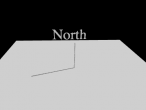
It has been a long long time that I have not blogged in VRMath2 community site. From time to time, I still use the VRMath2 Editor to create 3D worlds for work and leisure. Since about 2018, I started using a tetrahedron as a model or visual representation of integrated STEM (science, technology, engineering, mathematics). I presented in the 2019 ICTE Conference, as well as in many classes to pre-service teachers. Finally in 2026, I created a 3D model of this to showcase some ideas about STEM integration.
Integrated STEM or STEM integration may have been about three decades in the run and still going strong. The main drivers are related to real-world applicatioins, needs for current and future workforce, visions of future competencies, and a range of social political chases in local, regional, national and international arenas. In real-world or industries, works (products, processes, services) are done naturally with any required, applicable disciplinary knowledge and skills, while in education, learning is still mostly disconnected and isolated in individual subjects. Hence, STEM, or integarted STEM education is proposed to bridge the gap from school learning to real-world problem-solving competency.
The why, what and how of STEM are all big topics to study. In this blog, with the proposed tetrahedron model, is perhaps useful to explain and provoke thinking about the what and how of STEM integration.
So what is STEM integration from the tetrahedron?
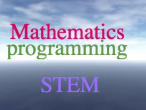
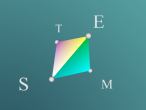
The four vertices of the tetrahedron represent the four disciplines of Science, Technology, Engineering, and Mathematics. Without the tetrahedron, they stay as some distant disciplines without connection or intersection. With the tetrahedron, they are connected by edges, faces and a solid that are more than the sum of S, T, E and M.
And, how can STEM be integrated or what are the types of STEM integration? Most literature agree that two or more disciplines could be integrated within the domain of STEM integration. And so,
- The six edges of the tetrahedron represent the integration of any two disciplines of STEM: ST, SE, SM, TE, TM, and EM.
- The four faces of the tetrahedron represent the integratino of any three disciplines of STEM: STE, STM, SEM, and TEM,
- The solid of tetrahedron then represents the full integration of all four disciplines of STEM.
Some prompting questions for teachers and educators to think:
- What examples (e.g., learning activities, projects, real-world applications) have you experienced for each of the integrations in edges and faces and the solid?
- Can you create one activity or project for each of the types of integration?
- Do the 6 edges, 4 faces, and 1 solid of STEM integration actually exist or some could not be found?
- Integration usually lead to outcomes beyond the learning in S, T, E, and/or M. What could those outcomes be?
I recently did a STEM workshop about integrated STEM and PBL/PjBL, in which I also presented this tetrahedron model https://www.makerclubqut.net/resources/workshops/stem-workshop-for-taiwan-teachers-2026. I also used the hands-on activity as an example of STE integration https://www.makerclubqut.net/maker-projects/magic-lightbulb-reed-switch .
Please leave a comment below and let me know what you think.
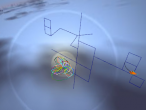
Logo program: tetrahedron_STEM.logo
- Andy's blog
- Login or register to post comments
- 480 reads